Image


The sun rises slowly over Bukuya, Fiji, casting a warm glow on the farm field where Matelita Vivuga begins her day. With careful hands, she checks the young seedlings growing near her home—small plants that have brought big changes to her family’s life. For Matelita, these short‑term crops are more than just vegetables; they represent stability, opportunity, and a more secure future.
Matelita, is 45 years old and is a mother of four. For her and her husband Aloesi Sivo farming has always been the primary source of their livelihood, with kava (Piper methysticum) as their main cash crop. But kava requires patience–it takes 3–4 years to mature, and the income it generates slow, uncertain and often and unpredictable.
When Matelita joined the JP RWEE, she received seedlings such as cucumber, long bean, tomato and watermelon - crops with short growing cycles and quick returns. The introduction of these short-term crops opened new possibilities for the family, offering the chance to earn income within just 3–4 months instead of several years.
Their first success came from planting off-season tomatoes, which produced a strong harvest and brought good income. The quick returns motivated both Matelita and her husband to expand their planting and deepen their engagement with the programme.
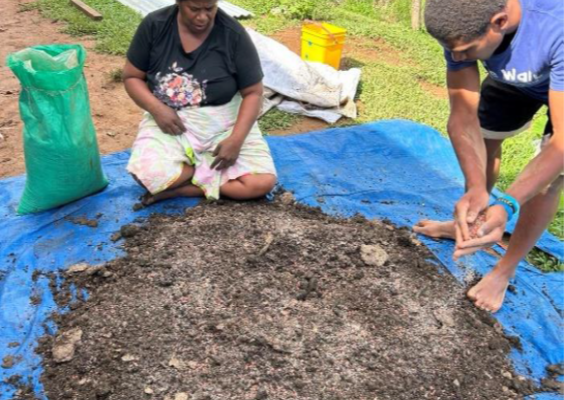
Matelita and son Aloesi mixing soil, poultary manure and NPK for nursery beds
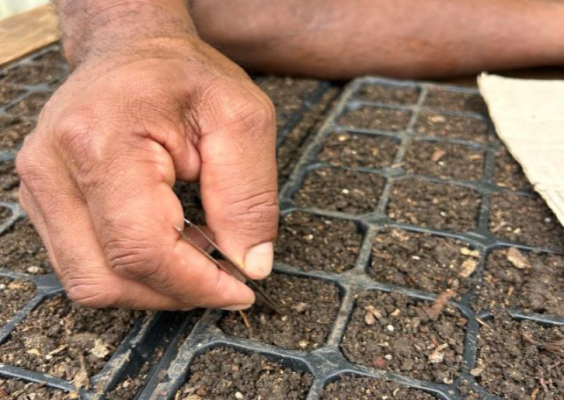
Matelita's husband placing tomatoe seeds in the tray
But the journey has not been without challenges. At first, they used containers to raise seedlings. However, this method resulted in around 50 percent loss, and transplanted seedlings often took 3–4 days before recovering and growing well. Another major challenge is the long travel time of 2–3 hours to reach their farm.
Despite these difficulties, the couple remain committed to cash-crop farming because of the tangible benefits. With income from both kava and vegetables, they were able to build a bathroom and install a flush toilet, major improvements that brought comfort and better sanitation to their home.
They also opened a small canteen and reinvested further earnings in their farms by purchasing manure, nursery soil, trays and green netting. Vegetable farming has since become a family venture, with each member contributing to the planning, planting and harvesting.
While the village has a community nursery supported by the programme, Matelita hopes to manage her own nursery one day.
Reflecting on the transformation, she says,
“When we saw how fast the vegetables brought in income, we realised we could improve our home and grow our farm at the same time. These short-term crops have really lifted our family.”
Looking ahead, Matelita envisions a future where both kava and vegetables sustain her family, where her children learn from her dedication, and where her own nursery helps her strengthen her livelihood even further. Her story is one of resilience, adaptation, and the quiet but powerful hope found in every new seedling she plants.