Image


In the lush hills of Rwanda, a quiet revolution is unfolding, one rooted in the fundamental right to food. Rural women, often relegated to the sidelines, are leading this change.
The Joint Programme on Rural Women's Economic Empowerment (JP RWEE), a collaborative effort by the Food and Agriculture Organization of the United Nations (FAO, UN Women, the International Fund for Agricultural Development (IFAD), and the World Food Programme (WFP), is driving the transformation through the Farmer Field and Life School approach which equips women with knowledge, skills, and confidence to become self-sufficient.
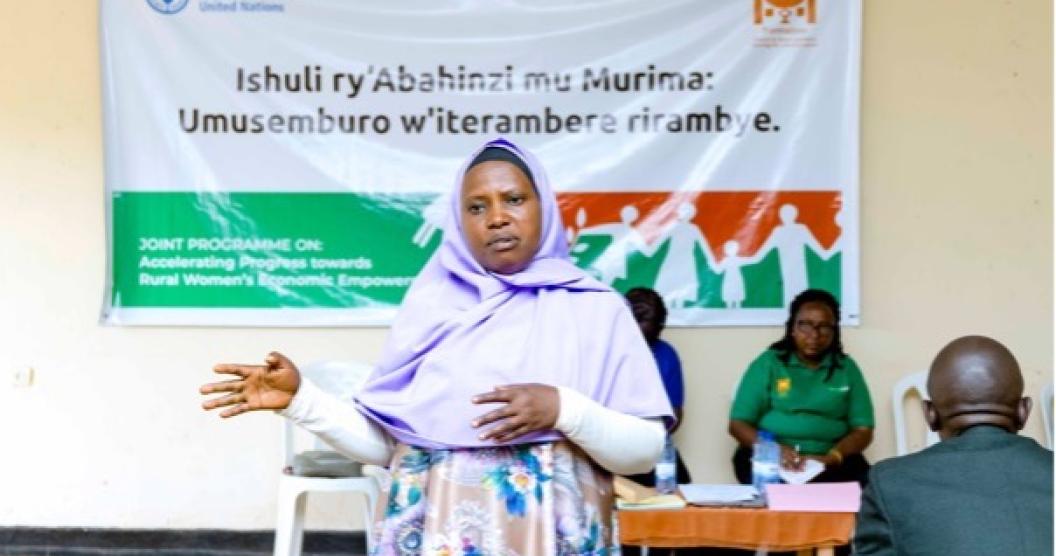
Shakila explains how she’s helped form five savings groups for other women. Photo: FAO/Jean Baptiste Nkurunziza
The Farmer Field and Life School approach is centred around community-led learning initiatives. These typically involve women gathering in small groups, often within their villages, to share experiences, learn new techniques, and build solidarity. The groups are safe spaces where women can freely express themselves, ask questions, and challenge traditional norms. Ultimately, JP RWEE partners design the groups to empower women with the knowledge and skills to assert their right to food.
“Before joining the Farmer Field and Life School group, I was very shy and couldn’t express my ideas in public or decide for myself,” explained Mukahigiro Beata.
“I thought it was up to my husband to take care of his family and decide everything in our household.”
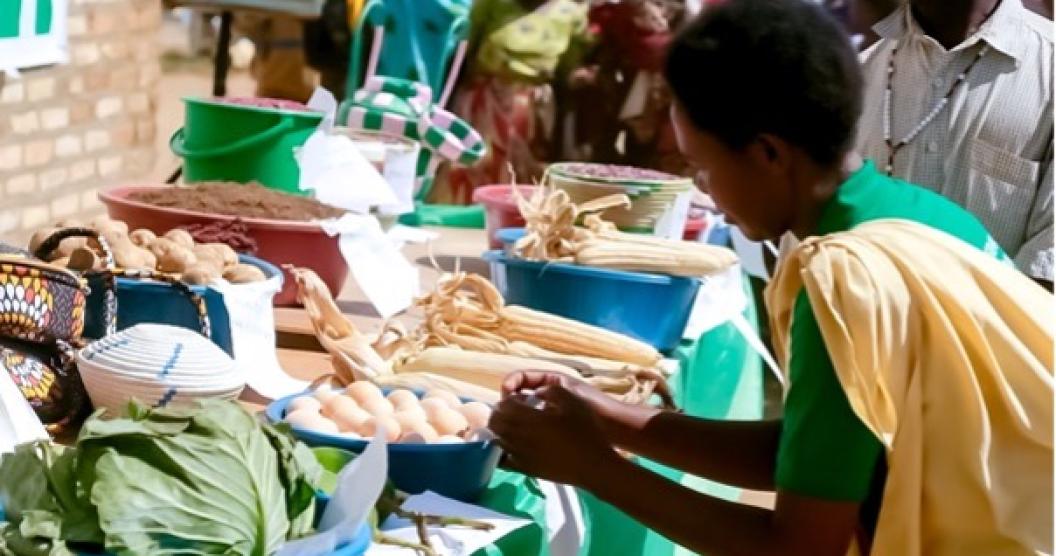
Beata selling some of her produce. Photo: FAO/Jean Baptiste Nkurunziza
Mukahigiro participated in sessions where women discussed how to initiate activities to support families, households and communities. They spurred her to start a business selling sorghum with borrowed money from the group. Her new income meant she could buy her children's school materials for the first time and establish a garden, saving money that she would otherwise spend on vegetables.
Beata now advocates for expanding Farmer Field and Life School groups to other sectors of Nyaruguru district.
The curriculum covers various topics, addressing agricultural practices, health, nutrition, financial literacy, and gender equality. By taking a holistic approach, it recognises that women's empowerment extends beyond the field.
For example, when it comes to agriculture, women can learn about sustainable farming practices, crop diversification, and natural resource management. Health and nutrition sessions cover maternal health, hygiene, and balanced diets. Through financial literacy meetings, participants can gain budgeting, savings, and entrepreneurship skills. Also, gender equality discussions allow people the space to challenge stereotypes and promote women’s rights.
“Before joining Farmer Field and Life School activities, I was wondering about the end of this extreme poverty, and I didn’t have an answer,” explained Dushimimana Anitha. "I was not able to feed my family and to pay health insurance. It was not easy to pay the school fees of my children."
Anitha learned techniques to boost agricultural production through the Farmer Field and Life School group, including pest management principles and agricultural conservation. These involved maintaining soil cover, no-tillage, and applying mulching before sowing.
She also expanded her knowledge about preparing balanced diets, saving, and accessing finance. After saving regularly, she was eligible for a loan from her Farmer Field and Life School group "to start a small business which can generate income,” she explained.
“I tried to buy and sell bananas for my neighbours and in the local market. I got a profit of 50,000 Rwandan francs [about USD 38]. From there, I paid health insurance for my family easily; I was able to feed my family without challenges.”
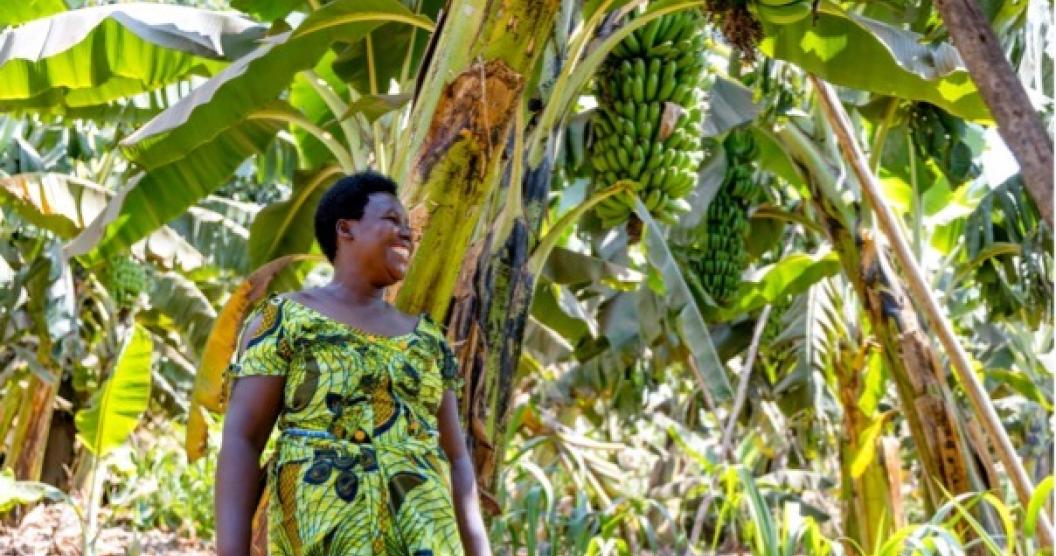
Anitha stands beneath some of her banana crops. Photo: FAO/Jean Baptiste Nkurunziza
After repaying the first loan, Anitha took another to increase her banana stock and expand the business to include cassava and Irish potatoes. She also opened her first bank account and gained access to Rwanda's financial markets.
Through Farmer Field and Life School sessions, participants can join practical sessions, visit demonstration plots, practice new techniques, and exchange seeds and seedlings. There's an emphasis on learning by doing, designed to reinforce confidence and competence. Over time, participants have reported that by applying knowledge, they see tangible improvements in crop yields, household incomes, and overall well-being.
Shakila explained that she "used to over-depend on [her] husband for food.”
The sessions helped Shakila establish five savings groups in her village, assisting other women in saving money and building businesses. With her own profits, she has bought a house, chickens, and goats, significantly improving her family's economic, food, and nutrition conditions.
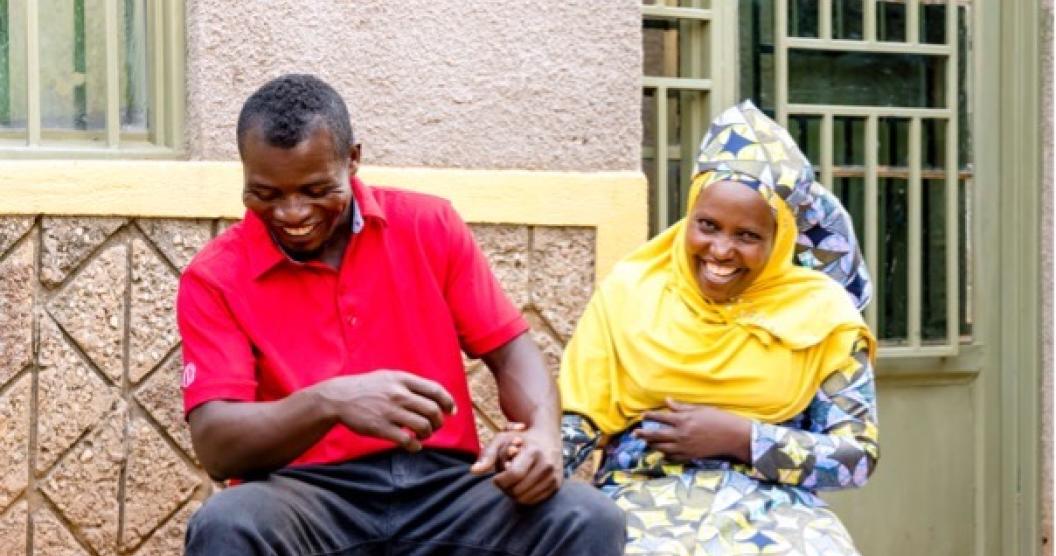
Shakila and her husband. Photo: FAO/Jean Baptiste Nkurunziza
"My husband is now considering me, and together, we are enjoying better living conditions." - Shakila.
The women participating can build social capital by forming bonds and supporting each other. Saving groups emerge, women pool resources and can more easily access credit. These networks extend beyond agriculture, fostering collaboration in different areas of life.
The Farmer Field and Life School approach is more than agricultural training; it catalyses change, enabling rural women to assert their right to food. As these women embrace knowledge, support each other, and challenge norms, they become agents of progress, realising their right to food, one session at a time.
The JP RWEE is implemented by FAO, IFAD, UN Women, and WFP with the financial support of Norway, Sweden, and the Bill & Melinda Gates Foundation.